

Types of poker and their rules
Updated October 2026.
Talking about "poker" as if it were one game sells it short. There are dozens of types of poker, and although almost all of them share the same hand rankings and the same betting logic, they differ in how many cards you receive, whether there are community cards, how many betting rounds there are and how the pot is awarded. Those differences mean each variant demands a different strategy.
This guide summarises the poker variants you will find in online rooms and casinos, what sets them apart and which one suits each kind of player. If you want to learn from scratch, start with the basic rules of poker.
Types of poker at a glance
| Variant | Hole cards | Community cards | Betting rounds | Where it is played |
|---|---|---|---|---|
| Texas Hold'em | 2 | 5 | 4 | Every room; the game of the major tournaments |
| Omaha (PLO) | 4 | 5 | 4 | Second most played variant online |
| Omaha Hi-Lo | 4 | 5 | 4 | Large rooms and mixed games |
| Short Deck (6+ Hold'em) | 2 | 5 | 4 | Online rooms and high-stakes games |
| Seven Card Stud | 7 (3 hidden, 4 exposed) | 0 | 5 | Traditional casinos and mixed games |
| Razz | 7 | 0 | 5 | Mixed games |
| Five Card Draw | 5 | 0 | 2 | Home games and video poker |
| Chinese poker (Open Face) | 13 | 0 | No betting: points | Apps and private games |
| Caribbean Stud | 5 | 0 | 1 | Casinos, against the house |
Community-card variants
Texas Hold'em
The most played form of poker in the world and the one used in the big events, such as the World Series of Poker or the World Poker Tour, almost always in its No Limit version. Each player receives two private cards and five community cards are dealt in three stages: the flop (three cards), the turn (one) and the river (one). There is a betting round before the flop and another after each stage: four in total. The best five-card combination made from any mix of your own cards and the community cards wins.
Depending on the number of players the game is called heads-up (two), short-handed or 6-max (up to six) and full ring (seven to ten). The forced bets are the blinds: the small blind, to the left of the dealer, and the big blind, usually twice as much, which sets the minimum bet.
Who it suits: everyone. It is the variant with the most traffic, the most study material and the most tournaments at every price.
Omaha (Pot Limit Omaha, PLO)
The second most played variant online. The structure is identical to Hold'em (flop, turn, river, four betting rounds), with one difference that changes everything: you receive four hole cards and must use exactly two of them with three from the board. That rule makes strong hands far more frequent: a high pair is worth little, a flush without the ace is dangerous and nut straights appear often.
It is almost always played pot limit: the maximum bet is the size of the pot, which produces big pots and high variance. To choose which hands to play, see our guide to starting hands in Omaha.
Who it suits: players who already master Hold'em and want more action. It demands more conservative bankroll management.
Omaha Hi-Lo (Omaha 8 or Better)
Same mechanics as Omaha, but the pot is split between the best high hand and the best qualifying low hand (five different cards of eight or lower, straights and flushes not counting against you). The best possible low is A-2-3-4-5. One hand can win both halves ("scoop"), which is the goal of the strategy.
Who it suits: patient players who like calculation. It is more mathematical and less aggressive than PLO.
Short Deck or 6+ Hold'em
Hold'em with a 36-card deck: the twos, threes, fours and fives are removed. The rankings change: a flush beats a full house and, in most versions, three of a kind beats a straight; the ace can act as a five to make A-6-7-8-9. Strong hands come much more often and the game is very aggressive. It was born in the high-stakes games of Asia and is now in several online rooms.
Who it suits: anyone who wants constant action and accepts high variance.
Stud variants (no community cards)
Seven Card Stud
Before Hold'em took over, this was the dominant variant in US casinos. Each player receives seven cards over the course of the hand: two hidden and one exposed to start, three more exposed and a final hidden one, with a betting round after each deal (five in total). There are no blinds: everyone posts an ante and the player with the lowest exposed card opens with a forced bet (the "bring-in"). Since you see several of each opponent's cards, reading the board and remembering folded cards is the key skill.
Who it suits: players with memory and patience. Today it is played mostly in mixed games.
Razz
Seven Card Stud in reverse: the lowest hand wins. Straights and flushes do not count against you and the ace is the lowest card, so the best possible hand is A-2-3-4-5 (the "wheel"). It is part of the H.O.R.S.E. rotation in major tournaments.
Draw variants
Five Card Draw
The poker most of us learned at home. Each player gets five hidden cards, there is a betting round, players exchange up to five cards and there is one more round before the showdown. With no exposed cards, information is minimal and the bluff carries a lot of weight. It is also the basis of video poker. Full rules in draw poker: what it is, rules and how it is played.
2-7 Triple Draw
A draw variant where the lowest hand wins, with three draws and four betting rounds. Here straights and flushes do count against you and the ace is high, so the best hand is 2-3-4-5-7 with no flush. Common in high-stakes mixed games.
Other formats
Chinese poker (Open Face Chinese)
No bets and no pots: each player arranges thirteen cards into three rows (three, five and five) and the rows are scored against each other, with bonuses ("royalties") for strong hands. It is a points game for two to four players, very popular in apps. We explain it in Chinese poker: how to play and essential rules.
Caribbean Stud and other house-banked versions
Here you do not play against other people but against the dealer, as in blackjack: you post an ante, receive five cards, see one of the dealer's and decide whether to fold or bet double. There is no bluffing or hand reading, and the house has a fixed mathematical edge. The same goes for Three Card Poker, Ultimate Texas Hold'em and video poker. They are casino games with poker rules, not poker in the strict sense.
Mixed games: H.O.R.S.E. and 8-Game
Rotations of several variants that change every set number of hands. H.O.R.S.E. alternates Hold'em, Omaha Hi-Lo, Razz, Seven Card Stud and Stud Hi-Lo (Eight or Better). 8-Game adds 2-7 Triple Draw, Pot Limit Omaha and No Limit Hold'em. They are the ultimate test of a complete player.
Betting limits: no limit, pot limit and fixed limit
- No Limit: you can bet all your chips at any time. The standard structure for Texas Hold'em.
- Pot Limit: the maximum bet is the size of the pot. The usual structure for Omaha.
- Fixed Limit: bets and raises have a fixed size per round. The classic structure for Stud and mixed games.
Which type of poker to choose
- Starting from zero: No Limit Texas Hold'em at low stakes. That is where the players, the tournaments and the learning material are.
- You master Hold'em and want action: Pot Limit Omaha, with a bigger bankroll than you would use for Hold'em.
- You like calculation and patience: Omaha Hi-Lo or Seven Card Stud.
- You want to play with friends for fun: Five Card Draw or Chinese poker.
- You prefer not to compete against other players: the house-banked versions, knowing the edge belongs to the casino.
Almost all the online poker rooms we compare offer Hold'em and Omaha in cash games and tournaments; Stud, Razz and mixed games are only in the largest ones. And in all of them you can recover part of the commission you pay through rakeback.
Frequently asked questions about poker variants
What is the most played type of poker?
No Limit Texas Hold'em, by a wide margin, followed by Pot Limit Omaha. Between them they account for the vast majority of online traffic.
What is the difference between Texas Hold'em and Omaha?
In Hold'em you get two cards and may use any combination with the board; in Omaha you get four and must use exactly two. That is why winning hands in Omaha are much stronger.
Which poker is easiest to start with?
Texas Hold'em: few cards, simple rules and a huge amount of learning material. Five Card Draw is even simpler but is rarely played online for real money.
Are video poker and Caribbean Stud really poker?
They use poker hand rankings, but you play against the house with a fixed mathematical edge, not against other players. They are casino games with poker rules.
Do hand rankings change between variants?
In most, no: the ranking is the same. The exceptions are the "low" variants (Razz, 2-7, the low half of Hi-Lo), where the lowest hand wins, and Short Deck, where a flush beats a full house.
Responsible gambling. Poker is a game of skill with a significant short-term luck component. Play with a bankroll separate from your everyday money, and only if you are 18 or over.
You may also like
Pokerist: what it is, how to play and how to get free chips
Pokerist is one of the most famous poker applications that we can find to download to our phone. This app is based on the Texas Hold'em poker modality, although it plays with other forms of enterta...
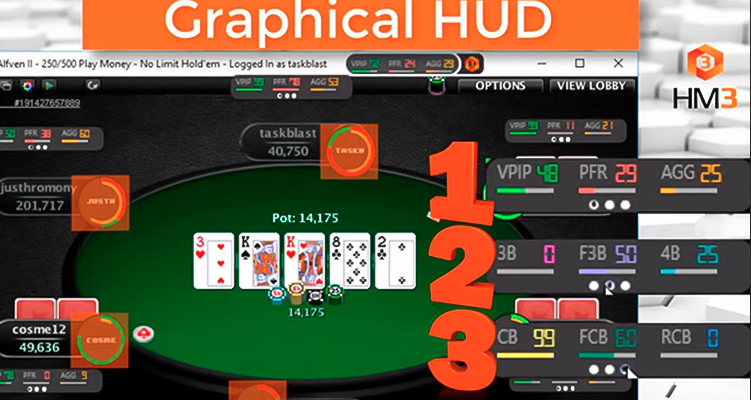
Holdem Manager: How to Use It to Improve Your Poker Game
Holdem Manager: How to Use It to Improve Your Poker GameIn the world of online poker, professional and regular players use advanced tools to analyze their performance and optimize their strategy. O...

Prominence Poker: what it is, tricks and trophies
Prominence Poker is one of the many free-to-play games that populate the digital video game stores. Developed by the Americans of Pipeworks Studio and edited by 505 Games, the title was released in...
Promotions